
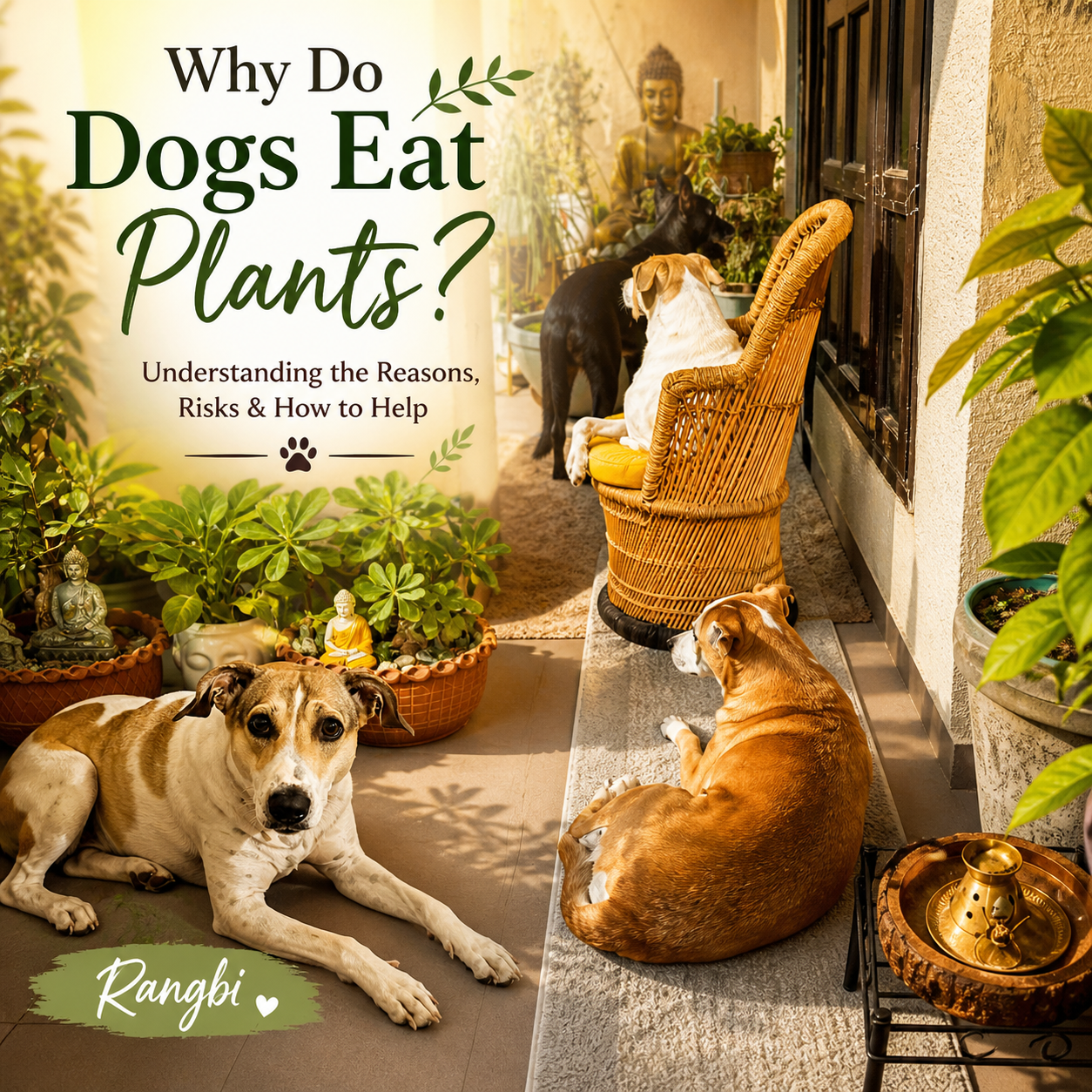

Dogs eat plants for many reasons, including curiosity, digestive discomfort, boredom, stress, and instinctive behavior. While occasional chewing is normal, some indoor plants can be dangerous for dogs.
Why dogs eat plants is something I didn’t learn from guides or textbooks. I learned it by living with eight rescued dogs who share my home like a family. Each of them carries a different past, a different temperament, and a different way of being.
And among them all, my youngest, Rangbi, is the one who will taste anything, chew everything, and turn even a quiet corner into her own little world of discovery.
Is It Dangerous If Dogs Eat Plants?
Most of the time, dogs chew plants out of curiosity, playfulness, or instinct. But not every plant inside a home is safe for them. Some indoor plants can irritate the stomach, while others may become dangerous if eaten in larger amounts. Living with eight dogs taught me that understanding which plants are harmless—and which are not—is just as important as understanding why dogs eat plants in the first place.
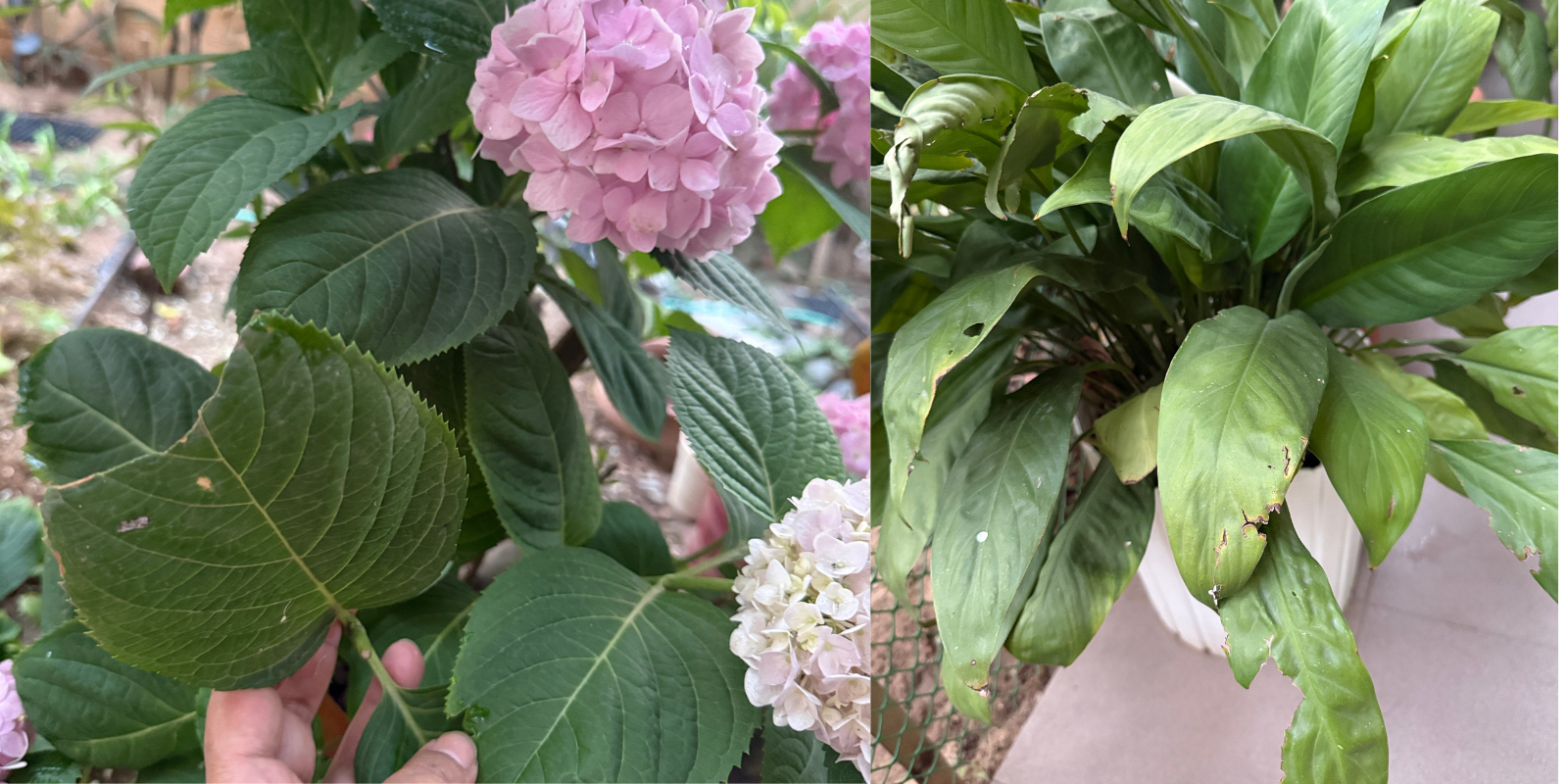
It started quietly.
One morning, I noticed that two of my plants looked slightly different, just gently chewed at the edges. A few leaves had lost their shape, as if someone had taken small, thoughtful bites.
I didn’t need to search for long.
Rangbi sat nearby, calm and observant, with that familiar look of innocent mischief. Over time, it became clear that this wasn’t a one-time incident. Slowly, plant after plant became part of her world.
She didn’t destroy them in a rush. She explored them—sniffing, nibbling, testing. If you’ve ever worried about plants that can harm pets, it’s important to understand what your dog is interacting with and why.
A Home Full of Dogs, A World of Differences
Living with eight dogs means living with eight personalities.
Some are calm and settled, happy to rest in a patch of sunlight.
Some are playful but gentle.
And then there is Rangbi—restless, curious, always discovering something new.
To her, plants are not decoration. They are living, moving, interesting things.
A leaf that shifts in the air becomes something to chase.
A new texture becomes something to test with her teeth.
In her world, everything is meant to be understood.
Choosing the right greenery matters in a home like this. I’ve learned to be mindful of what I keep around them, especially when selecting indoor plants that suit both home and pets, such as pet-safe plants.
What Are Some Pet-Safe Plants for Dogs?
Not all indoor plants are harmful to pets. Some pet-safe options include areca palm, spider plant, and certain herbs that are generally considered safer around dogs and cats. Before bringing any new plant into your home, it’s always best to verify whether it is safe for pets. You can also explore indoor plants that are safe for pets and those that may be harmful to dogs and cats.
Discover which indoor plants are safe for pets and which ones are harmful to dogs and cats.
Why Dogs Eat Plants
At first, I thought it was simple mischief.
But when you live closely with animals, you begin to notice patterns. You begin to understand without needing words.
Here are the 10 reasons why dogs eat plants, something I slowly understood just by watching her and the others:
10 Reasons Why Dogs Eat Plants
| Reason | What It Means |
|---|---|
| Curiosity and Exploration | Dogs explore the world with their mouths, so new leaves and textures attract them. |
| Boredom or Lack of Stimulation | When dogs are bored, they look for something to do—plants become an easy option. |
| Excess Energy | Active dogs may chew plants simply to release extra energy. |
| Instinct from Ancestors | Eating plants is a natural behavior passed down from wild ancestors. |
| Digestive Relief | Some dogs eat plants to ease stomach discomfort. |
| To Induce Vomiting | Dogs may chew grass or leaves to make themselves vomit and feel better. |
| Nutritional Deficiency | A lack of fiber or nutrients can lead dogs to seek plant matter. |
| Teething (Puppies) | Young dogs chew plants to relieve gum discomfort. |
| Attention-Seeking | If chewing plants gets your reaction, dogs may repeat the behavior. |
| Anxiety or Stress | Chewing can be a coping mechanism for stress or loneliness. |
While all these reasons are possible, every dog is different. In Rangbi’s case, it’s simple—she wants to taste, chew, and play. That’s why plant leaves become her little adventure. Other dogs also hunt for chewable plants once in a blue moon. This is when they want to vomit.
Do Dogs Eat Plants When They Feel Sick?
Sometimes, yes. Some dogs chew grass or plant leaves when they feel stomach discomfort or want to induce vomiting. Occasional plant chewing may not always be serious, but repeated behavior, sudden vomiting, loss of appetite, or unusual tiredness should be observed carefully and checked by a veterinarian if needed.
How to Stop Dogs from Eating Plants
I didn’t want to remove plants from my home. They bring calm and life into the space.
But I also didn’t want my dogs to be constantly corrected because living together means creating a space that protects them, without taking away their freedom.

Over time, I stopped seeing this as a problem and started treating it as something to manage gently.
A few small things helped me guide Rangbi away from my plants. I gave her soft chew toys so she had something safe to play with, a natural dog bone to keep her engaged for longer, and I used a mild pet-safe spray on a few plants I couldn’t move. Nothing harsh—just small adjustments that made it easier for all of us to share the space peacefully.
I also began choosing plants that are safe for pets and adjusting my home to support both. And I realized that protecting plants is not just about pets—it’s also about environment, care, and placement.
In the end, small changes made a big difference.
A Home That Lives Together
Today, my home still holds eight dogs, each with their own rhythm.
The plants are still here, growing quietly in their places.
Some plants were simply removed. A few were placed out of reach.
And Rangbi is still Rangbi—curious, energetic, full of life.
But now, there is balance. I’m happy they no longer touch my snake plant in the dining area or the peace lily in the balcony garden. I think they’ve already decided those don’t taste good at all… hahah.
Not because the behavior disappeared completely, but because understanding replaced confusion.
What Are the Signs Your Dog Ate a Toxic Plant?
If your dog eats a toxic plant, the symptoms can vary depending on the type of plant and the amount consumed. Common signs include vomiting, drooling, loss of appetite, stomach pain, diarrhea, unusual tiredness, or excessive licking around the mouth. Some dogs may also become restless or suddenly quiet after chewing harmful leaves. If you notice these symptoms and suspect your dog has eaten a toxic plant, it’s safest to contact a veterinarian as soon as possible.
Final Thoughts
Why dogs eat plants is not a single answer—it is instinct, curiosity, communication, and sometimes need.
Living with my dogs, especially Rangbi, taught me that behavior we often try to stop is sometimes something we need to understand first.
When we do, we create a home where everything—plants and animals alike—can exist in harmony.
