
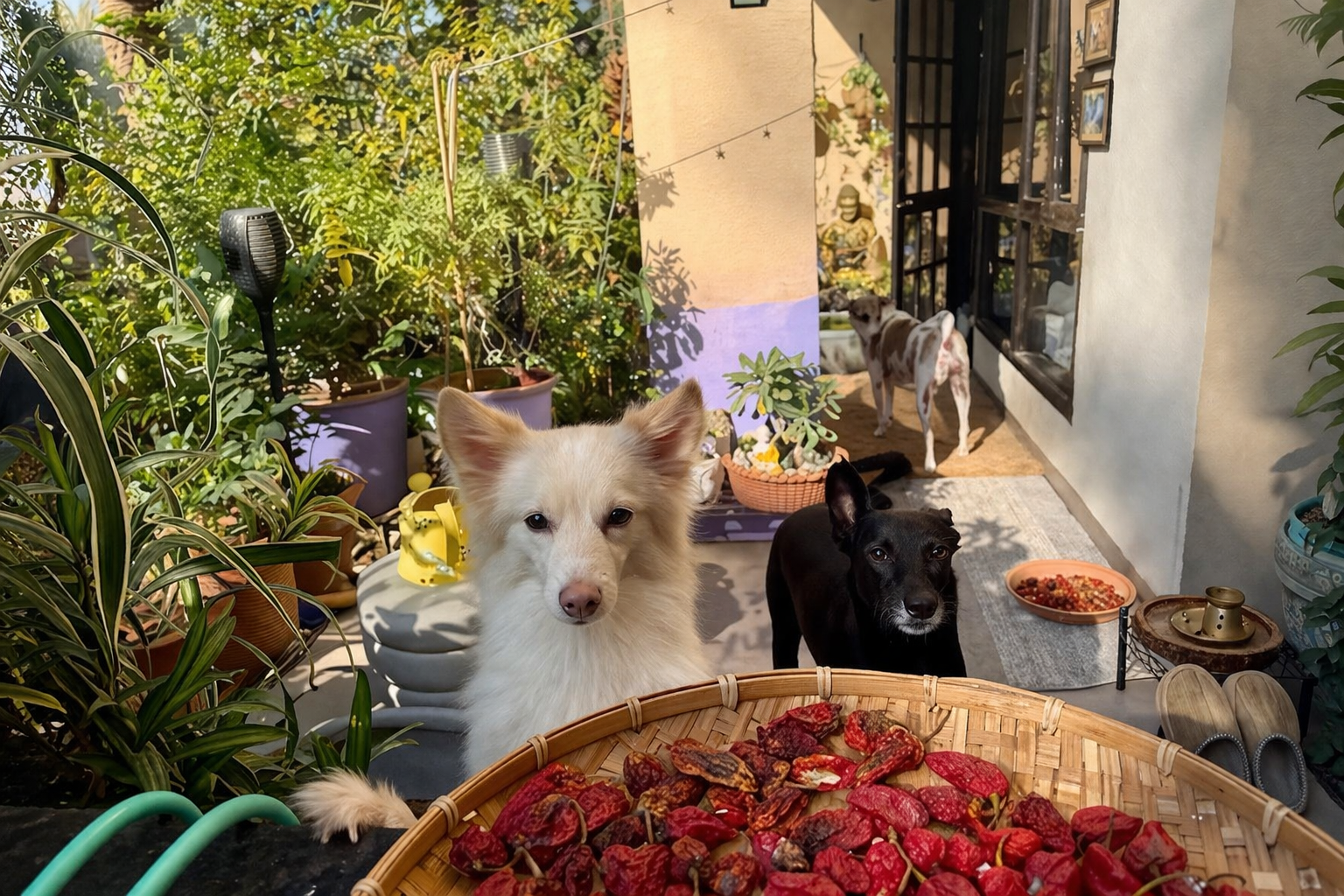

Are ghost peppers toxic to dogs? This is a common question among pet owners who grow Bhut Jolokia (Ghost Peppers) plants at home. While ghost peppers are not usually considered highly poisonous to dogs, their extreme capsaicin content can cause significant discomfort, mouth irritation, vomiting, and digestive upset if eaten.
As someone who grows ghost peppers every year while caring for multiple dogs, I understand why many pet owners ask this question. Fortunately, most dogs show little interest in eating ghost peppers, but accidents can happen, especially with curious puppies.
What Is a Ghost Pepper?
Ghost pepper, also known as Bhut Jolokia, is one of the hottest chili peppers in the world and originated in Northeast India. The peppers develop from green fruits into bright red or yellow peppers when fully ripe.
Many gardeners grow ghost peppers for their intense heat, unique flavor, and impressive productivity. If you’re interested in growing your own plants, you can also read my guide on how to grow ghost peppers in India.
Are Ghost Peppers Toxic to Dogs?
Ghost peppers are not typically considered highly toxic or poisonous plants. However, that does not mean they are safe for dogs to eat.
Why are ghost peppers toxic to dogs?
The main concern is capsaicin. Dogs are far more sensitive to spicy foods than humans, and even a small amount of ghost pepper can cause considerable irritation.
Most dogs will immediately find the taste unpleasant, but some curious pets may still chew or swallow a pepper before realizing how spicy it is.
Because ghost peppers contain extremely high concentrations of capsaicin, they can trigger symptoms affecting the mouth, stomach, and digestive system.
Why Would a Dog Eat a Ghost Pepper?
Many dog owners are surprised when their pets chew on plants, fruits, or vegetables.
Dogs may investigate garden plants because of:
- Curiosity
- Boredom
- Playfulness
- Hunger
- Natural exploratory behavior
Puppies are especially likely to investigate unusual objects by chewing on them.
If your dog frequently chews leaves, grass, or garden plants, you may also be interested in learning more about why dogs eat plants.
Symptoms If a Dog Eats a Ghost Pepper
If a dog accidentally eats a ghost pepper, symptoms may appear quickly.
Common signs include:
- Excessive drooling
- Pawing at the mouth
- Drinking more water than usual
- Lip licking
- Mouth irritation
- Vomiting
- Diarrhea
- Stomach discomfort
- Restlessness
The severity often depends on the dog’s size and how much pepper was consumed.
Most healthy dogs recover without serious complications, but the experience can be extremely unpleasant.
What Should You Do If Your Dog Eats a Ghost Pepper?
If your dog eats a ghost pepper, try not to panic.
First, remove any remaining peppers to prevent further consumption.
Make sure your dog has access to fresh drinking water. Many dogs instinctively drink more water after eating spicy foods because of the burning sensation caused by capsaicin.
Monitor your dog closely over the next several hours.
Contact your veterinarian if:
- Vomiting becomes severe
- Diarrhea is persistent
- Your dog appears unusually weak
- Symptoms continue for an extended period
- Your dog has existing medical conditions
Can Dogs Recover After Eating Ghost Peppers?
In most cases, yes. Healthy dogs usually recover completely after eating a ghost pepper, although they may experience temporary discomfort. Common symptoms include excessive drooling, mouth irritation, vomiting, diarrhea, and stomach upset.
Recovery time varies depending on the dog’s size, overall health, and the amount of ghost pepper consumed. Many dogs begin feeling better within a few hours to a day once the capsaicin has passed through their system.
However, puppies, senior dogs, and dogs with existing health conditions may be more sensitive to the effects of extremely spicy peppers. If symptoms are severe, persistent, or accompanied by unusual behavior, contact your veterinarian for advice. The ASPCA Animal Poison Control Center also provides guidance on potential pet poisoning emergencies.
Are Ghost Pepper Plants Safe Around Dogs?
In most cases, yes.
The biggest concern is the pepper itself rather than the plant.
In my experience, dogs rarely show interest in ghost pepper leaves or stems. The ripe peppers are far more likely to attract curiosity because of their bright colors.
However, every dog is different.
If you have a puppy or a dog that frequently chews plants, it’s a good idea to monitor access to pepper plants and harvest ripe peppers promptly.
You may also want to review other toxic plants for dogs and cats if you maintain a pet-friendly garden.
My Experience Growing Ghost Peppers Around Dogs
I have grown ghost peppers for several years while caring for multiple dogs.
Despite having ghost pepper plants in my garden every season, none of my dogs have ever shown interest in eating the peppers. They usually ignore the plants completely.
That said, I still take precautions.
I harvest ripe peppers regularly and avoid leaving freshly picked peppers where curious pets can access them. I also keep dried ghost peppers and pepper powders stored safely indoors.
In my experience, prevention is much easier than dealing with an accidental encounter with one of the world’s hottest peppers.
Can You Grow Ghost Peppers in a Pet-Friendly Garden?
Yes, absolutely.
Many gardeners successfully grow ghost peppers while keeping dogs and other pets.
A few simple precautions can help:
- Harvest ripe peppers regularly
- Keep harvested peppers out of reach
- Supervise curious puppies around the garden
- Remove fallen peppers from the ground
- Store dried peppers securely
Following these steps allows you to enjoy growing ghost peppers while reducing risks for pets.
Final Thoughts
Ghost peppers are not usually considered highly poisonous to dogs, but they are not safe treats either. Their extreme capsaicin content can cause significant mouth irritation, digestive upset, vomiting, diarrhea, and discomfort.
Most dogs will avoid ghost peppers on their own, but curious pets can occasionally investigate them.
If you grow Bhut Jolokia in your garden, simple precautions such as harvesting ripe peppers promptly and keeping them out of reach can help create a safer environment for your pets.
For most gardeners, ghost peppers and dogs can coexist successfully with a little common sense and supervision.
